
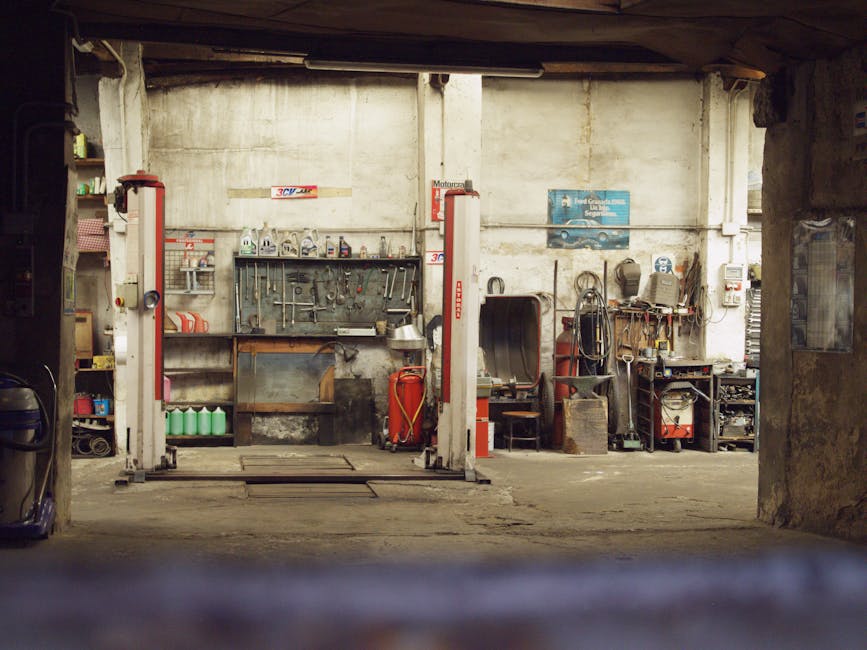

I've worked in some terrible workshops over the years. Cramped corners of garages, borrowed industrial units, a converted bedroom during a particularly desperate phase of furniture restoration. What I've learned is that you can do good work almost anywhere, but the right space makes everything easier and more enjoyable.
This isn't about creating the perfect workshop. It's about creating a functional one that fits your circumstances and budget.
Starting with what you have
Before buying anything, honestly assess your available space. A single garage works for most projects. A garden shed handles smaller work. Even a corner of a larger room can become productive if you're thoughtful about it.
The space requirements depend on what you're restoring. Small items like clocks, radios, and small collectibles need maybe 2m x 2m, decent bench space, and good lighting. Furniture restoration wants 3m x 4m minimum so you can move around pieces, plus ventilation for finishes and ideally some dust extraction. Motorcycles need 4m x 4m, a lift or elevated workspace, and power for tools. Classic cars demand 6m x 4m minimum, proper vehicle access (door width matters more than you'd think), and ideally an inspection pit or lift.
Three-phase power for serious welding equipment is nice to have but most home restorers manage without it.
The workbench
Your workbench is the heart of the workshop. This is where I'd spend money if you're going to spend money anywhere.
It needs to be sturdy. A wobbly bench is frustrating at best and dangerous at worst. Standard height is around 900mm, but adjust to whatever's comfortable for you. A good engineer's vice is invaluable, worth buying quality even if it means waiting until you can afford one. For the top surface, MDF works and is affordable. Hardwood is more durable.
Budget option: build your own. It's not complicated. Sturdy timber, solid top, basic joinery. Plans are everywhere online, and the result is often better than cheap manufactured alternatives.
Organisation
I've lost count of how many hours I've spent looking for things I put "somewhere safe." Organisation isn't about being tidy for its own sake. It's about not wasting time.
A tool chest or cabinet keeps hand tools protected and findable. Shelving handles parts, materials, and reference books. Small parts storage, whether drawer units or labelled containers, prevents the chaos of random screws and fixings scattered across surfaces. Wall-mounted racks put frequently used tools within reach.
The principle is simple: everything has a place, and you return things to their places when you're done with them. This is easier said than done when you're in the middle of something and the phone rings, but the habit pays dividends.
Lighting
Never underestimate lighting. Good light means seeing what you're doing, which means better work and fewer mistakes.
LED panels provide bright, even overhead illumination and are affordable now. Adjustable task lamps help with detailed work. Portable LED inspection lights get into dark areas where fixed lighting doesn't reach. If you can only improve one thing about your workspace, better lighting often makes the biggest difference.
Power
Insufficient sockets are frustrating and lead to extension lead tangles, which are inconvenient and potentially dangerous. Install more sockets than you think you need. RCD protection is essential for safety. Quality retractable extension leads are worth the investment over cheap alternatives that tangle and break.
Tools
Quality hand tools last a lifetime. Cheap tools break at inconvenient moments, damage what you're working on, and generally make everything harder. Buy the best you can afford, and buy used if new quality is out of reach. A decent second-hand screwdriver set outperforms brand new rubbish.
You need screwdrivers in various sizes including precision sizes. Spanners and sockets in both metric and imperial. Pliers and cutters. Hammers, including a ball pein, a soft-faced hammer, and a rubber mallet. Files in various sizes and cuts. Measuring tools: steel rule, tape measure, callipers, squares.
Add tools as your projects demand. A torque wrench becomes essential once you're doing engine work. A multimeter helps diagnose electrical problems. Vernier callipers allow precise measurement. A tap and die set lets you repair damaged threads.
Power tools increase efficiency but aren't immediately essential for everything. If you're starting out, a cordless drill/driver handles most needs. An angle grinder is versatile for cutting and grinding. A bench grinder sharpens and shapes. An orbital sander makes finishing work less tedious.
Later additions might include a pillar drill for accurate repetitive drilling, an air compressor that powers spray guns and impact wrenches, a MIG welder for metalwork, a sandblaster for rust removal.
Safety
A fire extinguisher, appropriate for your work. CO2 for electrical, dry powder for general purpose. A stocked first aid kit. Safety glasses, which you should actually wear. Hearing protection for power tools. Dust masks for sanding and grinding.
Keep exits clear. Secure heavy items against toppling. Store flammables properly. Check tools and equipment regularly.
This sounds obvious, and mostly it is. But I've seen workshops where obvious safety measures were ignored, and I've seen the results. It's not worth it.
Budget realities
You don't need to spend thousands to create a functional workshop. Buy second-hand tools from quality makers rather than cheap new ones. Car boot sales, auctions, and house clearances turn up bargain equipment. Build what you can yourself. Prioritise what you actually need now over what you might want someday.
False economies do exist though. Cheap tools that break cost more in replacement and frustration than quality ones would have cost initially. Inadequate lighting leads to mistakes. Poor ventilation creates health hazards with paints and chemicals. Insufficient storage creates chaos that wastes time.
Your workshop will evolve as your skills and projects develop. Start with the essentials, organise well, invest in quality where it matters. The right workshop makes restoration not just possible, but genuinely enjoyable.
For more on specific project types, see our guides to motorcycle restoration, furniture restoration, and finding barn finds.