
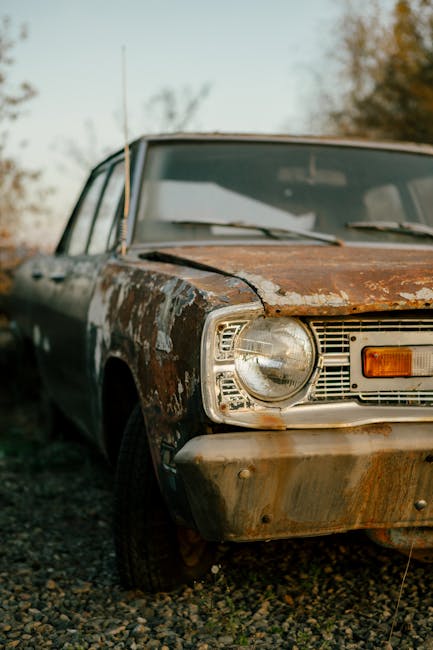

Everyone has a barn find story, even if it's secondhand. A friend's uncle's neighbour discovered a pristine E-Type under dustsheets in an old coach house. Someone at a car show heard about three pre-war Bentleys in a Scottish castle. The details vary but the dream is consistent: forgotten treasure waiting to be discovered.
The reality is usually more modest, but that doesn't mean barn finds don't happen. They do. I've been involved in finding a few myself, none of them headline-worthy but all of them satisfying in their own way. Here's what I've learned about making your own luck.
What actually counts as a barn find
A genuine barn find is a vehicle that's been stored and forgotten for an extended period, usually at least ten years and often much longer. The key word is "forgotten." A car that's been sitting in someone's garage while they intended to get around to restoring it isn't quite the same thing, even if it looks similar.
What makes barn finds valuable, beyond any intrinsic worth of the vehicle itself, is preservation through absence rather than deterioration through misuse. Dry storage in a barn, garage, or outbuilding can keep a car in suspended animation in ways that continued use or outdoor exposure never could. Paint fades, seals dry out, fluids go bad, but the fundamental structure often survives remarkably well.
Complete condition matters enormously. Barn finds where someone has already stripped parts for another project, or where mice have made nests in the upholstery, or where the engine was removed "temporarily" twenty years ago, are less attractive propositions. Known history and documentation add value too, both financially and for your own satisfaction during restoration.
Where to actually look
Barn finds don't advertise themselves, obviously. Finding them requires effort, patience, and willingness to follow thin leads that often go nowhere.
Agricultural properties remain good hunting grounds. Farms have outbuildings, and outbuildings accumulate things. Many farmers bought sports cars in their youth, parked them when family or farming demands took precedence, and simply never got around to doing anything about them. The car became part of the landscape, like the old tractor in the corner that hasn't moved since 1978.
Estate clearances yield discoveries regularly. When someone dies, executors often find vehicles the family didn't know existed. Solicitors, estate agents, and auction houses handling clearances sometimes contact marque clubs or advertise finds. Getting known as someone interested in particular vehicles means people sometimes think of you when something appears.
Old commercial premises occasionally reveal hidden cars too. Business owners stored personal vehicles at work and forgot about them when they retired or sold up. The warehouse that gets cleared after decades in the same ownership sometimes holds surprises.
The networking approach
Word of mouth remains the most productive method. Tell everyone you know that you're looking. Mention it at car shows, club meetings, pubs. Join online forums and let people know your interests. The classic car community talks, and information circulates.
I once found a decent project because I mentioned what I was looking for to someone at a petrol station who mentioned it to his brother-in-law who knew a farmer. These chains of connection are how many barn finds actually get found.
More modern approaches work too. Google Maps satellite view occasionally reveals vehicle shapes under covers or in open storage. Property listings sometimes show glimpses of stored vehicles in photographs. Some people systematically approach owners of properties with obvious storage space, politely enquiring about what might be inside. This requires tact and tolerance for rejection, but occasionally produces results.
Assessment: being honest with yourself
The excitement of potentially finding something special can cloud judgement. Force yourself to assess thoroughly and honestly.
Start with documentation. Before you even examine the vehicle, ask about paperwork. Registration documents, MOT history, receipts, photographs. These add value, confirm authenticity, and help enormously during restoration. A barn find with good history is worth considerably more than one without.
Walk around the vehicle slowly. Rust bubbles or perforation, panel fit and alignment, evidence of previous repairs, completeness of trim and fittings. Take your time. What you're looking for is overall condition, but also anything that suggests hidden problems.
Get underneath if possible. Chassis rails and outriggers, floor pans and sills, suspension mounting points, fuel tank condition. This is where serious rust does serious damage. Surface rust on panels is cosmetic. Structural rust compromises safety.
Without running the engine, check whether it turns over by hand. Look at the oil condition on the dipstick; milky oil indicates water contamination, which suggests head gasket or worse. Inspect coolant and brake fluid levels and condition. Look for obvious damage or missing parts.
Watch for red flags. Water damage from flooding or leaks creates extensive hidden problems. Fire damage, even apparently minor, can mean wiring and mechanical issues that surface later. Severe structural rust is serious and expensive to address properly. Missing major components, engines, gearboxes, trim, can be impossible to source for some vehicles. Previous modification attempts may have caused damage that isn't immediately obvious.
Negotiation realities
Barn finds present particular negotiation challenges. Owners often have emotional attachments to vehicles that have sat in their family for decades. They may also have unrealistic expectations based on online valuations of concours examples, not understanding that their rough project is worth a fraction of a restored car.
Prepare by researching what similar projects, not restored examples, have actually sold for. Understand the realistic cost of restoration to a useable standard. This information supports your negotiation position.
Be honest about condition without being insulting. Point out issues factually. Explain the costs involved, because many owners genuinely don't understand restoration economics. Show genuine enthusiasm, since sellers generally prefer their cars going to enthusiasts who'll appreciate them rather than to dealers who'll flip them. Be patient, because some sellers need time to come to terms with parting with something. And make fair offers, because lowball approaches often end negotiations entirely.
After you've bought it
Successfully acquiring a barn find is just the beginning. Long-stored vehicles rarely drive, so arrange appropriate transportation. Consider access to the storage location, whether a trailer can get in, whether the vehicle can roll out, what needs to move.
Before doing anything else, document the vehicle thoroughly with photographs. This feels tedious in the excitement of acquisition, but you'll be grateful later. Resist the urge to clean or alter anything immediately. Stabilise the condition to prevent further deterioration, but preserve the evidence of what you've found.
Then create a comprehensive condition report. Research parts availability and costs through our guide to sourcing parts for vintage restorations. Decide on your restoration goals: concours show car, useable driver, sympathetic preservation. Set a realistic budget and timeline, then probably add 50% to both.
The reality
Most barn finds need extensive work. The romantic notion of dusting off a car and driving away rarely matches reality. But the joy of rescuing something forgotten, the detective work of tracing its history, the satisfaction of returning it to the road, that's real and that's worth pursuing.
Browse our classic car listings for projects that have already been found, or keep your eyes open for discoveries of your own. Your barn find is out there somewhere. Whether you find it depends largely on how hard you look and how many people know you're looking.