
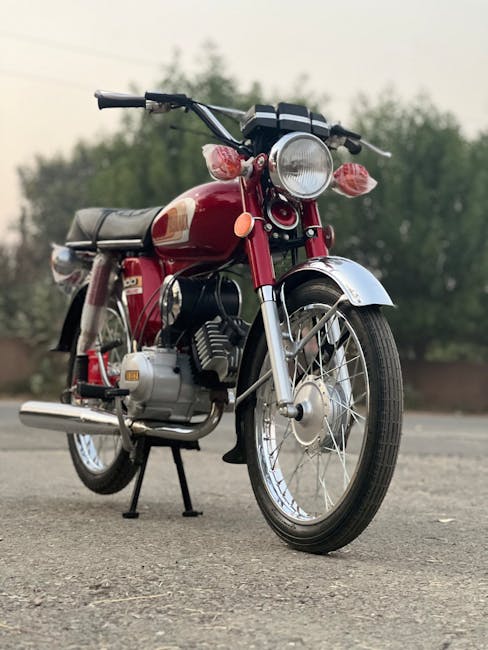

I still remember the first time I heard a restored BSA Gold Star fire up after three years of sitting silent in someone's garage. That distinctive thump, the smell of old oil warming up, the look on the owner's face. That moment is what motorcycle restoration is really about.
If you're thinking about tackling your first motorcycle restoration project, I'd encourage you to start by being honest with yourself about what you're getting into. This isn't a weekend project. It's a relationship.
Choosing the right bike
The temptation to buy the cheapest wreck you can find is strong. I get it. But a bike that's too far gone will drain your enthusiasm long before it drains your wallet. What you want is a complete machine, ideally something popular enough that parts are still available. British classics like BSA, Triumph, and Norton have decent parts support. Japanese bikes from the 1970s and 1980s, particularly the Honda CB series or Yamaha XS models, are even better for beginners because the engineering is more forgiving of mistakes.
The frame and engine matter more than cosmetics. Rust on chrome is fixable. A cracked frame is not, at least not without serious expense. And documentation, boring as it sounds, makes everything easier down the line.
Tools and workspace
You don't need a professional workshop, but you do need somewhere dry with decent lighting and enough space to spread out. A corner of a garage works fine for most bikes. If you're working from nothing, read our guide on setting up a home restoration workshop before you buy anything.
The tools themselves aren't complicated. Socket sets in both metric and imperial, combination spanners, screwdrivers, pliers. A torque wrench becomes essential once you're into engine work. A multimeter helps diagnose the electrical gremlins that plague older bikes. Most of this you can accumulate gradually as your needs develop.
What makes a real difference is having somewhere to put things. I've lost count of how many hours I've spent looking for bolts I set down "somewhere safe." Labelled containers and a clean bench save more time than any power tool.
Where to begin
The natural instinct is to dive straight into the exciting bits. Don't. Before you touch a single bolt, photograph everything. Document what's there, what's missing, what looks original and what doesn't. This might feel tedious, but six months from now when you're trying to remember which wire went where, you'll be grateful.
Then assess systematically. Does the engine turn over? Check compression if you can. Look at the frame for cracks and accident damage. Test the electrics, even if they don't work, because understanding what's failed tells you what needs replacing. Inspect the brakes thoroughly. Examine the suspension for leaks.
Based on all this, make a plan. What needs replacing? What can be refurbished? What's your actual budget, not your optimistic budget? The purchase price is just the beginning. A reasonable rule is to multiply your initial parts estimate by three.
The reality of costs and time
I wish I could tell you motorcycle restoration is cheap. It isn't. Even a straightforward project on a common bike will cost more than you expect, take longer than you planned, and throw up problems you didn't anticipate. That's not meant to discourage you. It's meant to prepare you.
Quality restoration takes time. Rushing leads to mistakes, poor finishes, and corners cut that you'll notice every time you look at the bike. Better to accept from the start that this is a marathon. If you need quick gratification, buy a finished bike and take up a different hobby.
Originality matters too, at least if you care about value. Research what's correct for your model and year. Join a marque-specific club. The expertise you'll gain access to often saves more money than the membership costs.
Finding parts
Parts sourcing deserves its own article, and we've written one: sourcing parts for vintage restorations. The short version is that popular models have decent parts availability through specialist suppliers, while rarer bikes require more creativity. Autojumbles, fellow club members, and international sources all play a role.
For motorcycles listed on our marketplace, parts availability is one of the things worth considering before you commit. A bike is only as restorable as the parts you can find for it.
Getting help
No one expects you to know everything. The classic motorcycle community is generally welcoming, and most experienced restorers remember being beginners themselves. The VMCC and British Motorcycle Owners Club are good starting points. Model-specific forums exist for most popular bikes, and YouTube tutorials can walk you through procedures that would be impenetrable from a workshop manual alone.
That said, workshop manuals are still essential. Buy one for your specific model before you start taking things apart.
The first ride
The moment your restored motorcycle fires into life, properly, for the first time, is something you won't forget. Take it slowly at first. Check everything twice. Bed in the brakes gently. And when you finally take that first proper ride, try to savour it rather than immediately thinking about the next project.
Because there will be a next project. They're addictive that way.